
Understanding AC Duct Cleaning and How HVAC Air Duct Systems Work
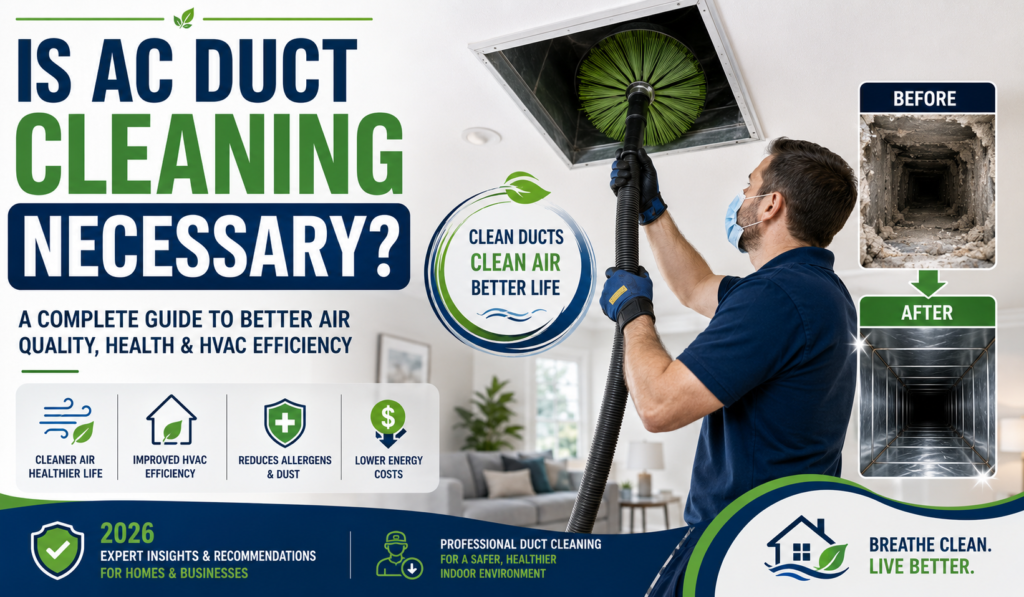
Many homeowners and business owners ask the same question: is AC duct cleaning necessary? To answer that question, it helps to understand how an HVAC system works. Air ducts are the pathways that carry cooled or heated air from your heating and cooling system to every room in a building. As air moves through these ducts, small particles such as dust, dirt, pollen, and pet hair can collect inside the system over time.
AC duct cleaning is the process of removing these materials from the ductwork, vents, and other parts of the HVAC system. Professional cleaning helps keep the system clean and allows air to move more easily through the building.
What Happens Inside Air Ducts Over Time
Air ducts are hidden behind walls, ceilings, and floors, so most people never see what happens inside them. As months and years pass, dust and debris slowly settle inside the ductwork. In some cases, moisture can enter the system and create conditions where mold may grow.
Homes with pets, smokers, recent construction work, or heavy outdoor dust often experience faster buildup inside their air ducts. This buildup can affect airflow and indoor air quality if it becomes severe.
Is AC Duct Cleaning Necessary for Every Home and Business
The simple answer is no. AC duct cleaning is not necessary for every property or every HVAC system. Many systems operate well for years without needing professional duct cleaning.
However, there are situations where cleaning becomes important. The need depends on the condition of the ductwork, indoor air quality concerns, and the presence of dust, mold, pests, or other contamination.
Signs That Your Air Ducts Need Professional Cleaning
Certain warning signs can help determine whether your air ducts need attention. These signs often appear gradually and become more noticeable over time.
Excess Dust Around Vents and Indoor Surfaces
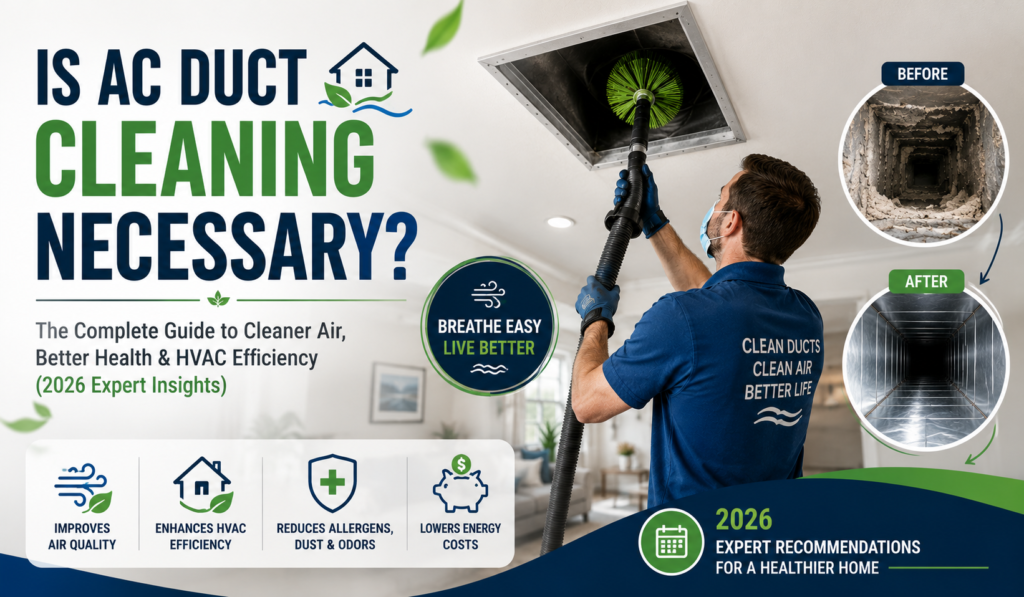
If you notice dust collecting quickly around vents, furniture, or floors shortly after cleaning your home, your ductwork may contain a large amount of debris. While some dust is normal in every home, excessive dust may suggest that particles are circulating through the HVAC system.
Unpleasant Odors Coming from Air Conditioning Vents
A musty or unpleasant smell coming from air vents may indicate mold growth, trapped moisture, or debris inside the ducts. Persistent odors that return every time the air conditioner starts should be investigated by a professional HVAC technician.
Reduced Airflow and Uneven Cooling Performance
When some rooms feel cooler than others or airflow from vents seems weak, dirty ducts may be restricting air movement. Blocked ducts force the HVAC system to work harder to deliver air throughout the building.
Increased Allergy Symptoms and Indoor Air Quality Concerns
Some people notice more sneezing, coughing, or allergy symptoms while indoors. Although dirty ducts are not always the cause, heavy dust buildup can contribute to poor indoor air quality in certain situations.
Visible Mold Growth Inside Air Ducts and Ventilation Systems
Visible mold inside ducts or around vents should never be ignored. Mold can spread through airflow and may create health concerns for occupants. Professional inspection is recommended whenever mold is suspected.
Pest Infestation, Insects, or Rodent Activity in Ductwork
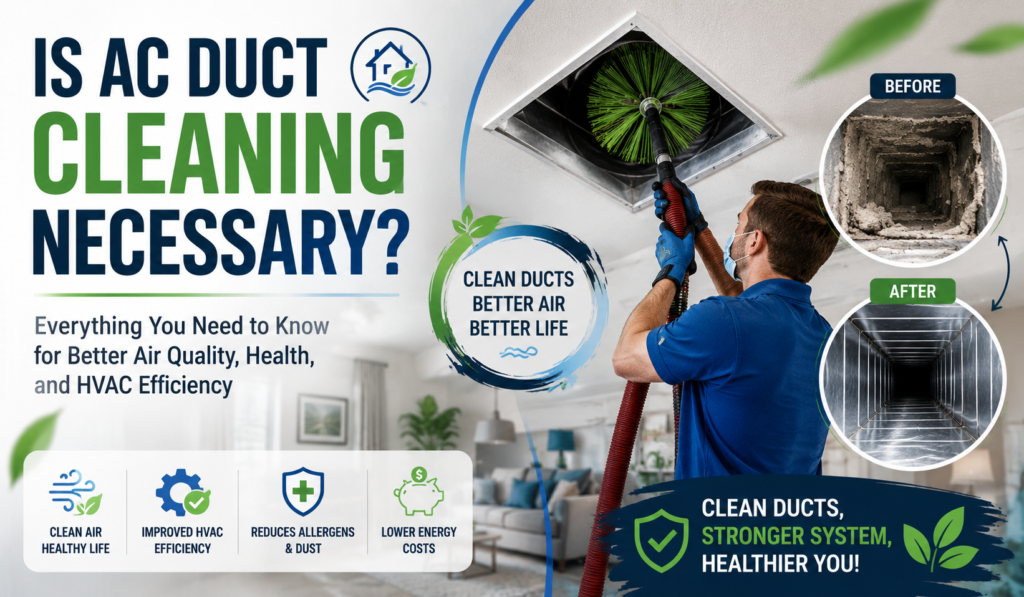
Rodents and insects sometimes enter duct systems looking for shelter. They may leave droppings, nesting materials, and unpleasant odors behind. If pests have been present, professional duct cleaning is usually recommended after the infestation has been removed.
How Dirty Air Ducts Affect HVAC Efficiency and Energy Consumption
When dust and debris build up inside ducts, airflow can become restricted. This forces the HVAC system to run longer to maintain comfortable temperatures. Over time, this extra work may increase energy consumption and place additional strain on system components.
Clean airflow pathways can help the system operate more efficiently and maintain consistent temperatures.
The Connection Between AC Duct Cleaning and Indoor Air Quality
Indoor air quality plays an important role in comfort and health. Since HVAC systems move air throughout the building, the condition of the ductwork can affect the quality of the air people breathe every day.
While duct cleaning alone cannot solve all indoor air quality problems, it can help when contamination inside the system is present.
Can Air Duct Cleaning Reduce Allergens, Dust, and Pet Dander
Professional cleaning can remove accumulated dust, pet hair, pollen, and other allergens that have settled inside the ductwork. This may reduce the amount of these particles circulating through the home.
Results vary depending on the property and the source of the allergens, but cleaning can be helpful in homes with heavy buildup.
The Impact of Dirty Ducts on Respiratory Health and Asthma
People with asthma or respiratory conditions are often more sensitive to airborne particles. Dirty ducts do not automatically cause illness, but reducing unnecessary contaminants in the HVAC system may improve comfort for sensitive individuals.
Situations Where AC Duct Cleaning Is Highly Recommended
There are several situations where HVAC professionals strongly recommend duct cleaning due to increased contamination risks.
Newly Constructed or Renovated Properties
Construction projects often create large amounts of dust and debris. Even when builders clean thoroughly, fine particles can enter the duct system during the project. Cleaning after renovations can remove these materials before they continue circulating indoors.
Moving Into an Older Home or Commercial Building
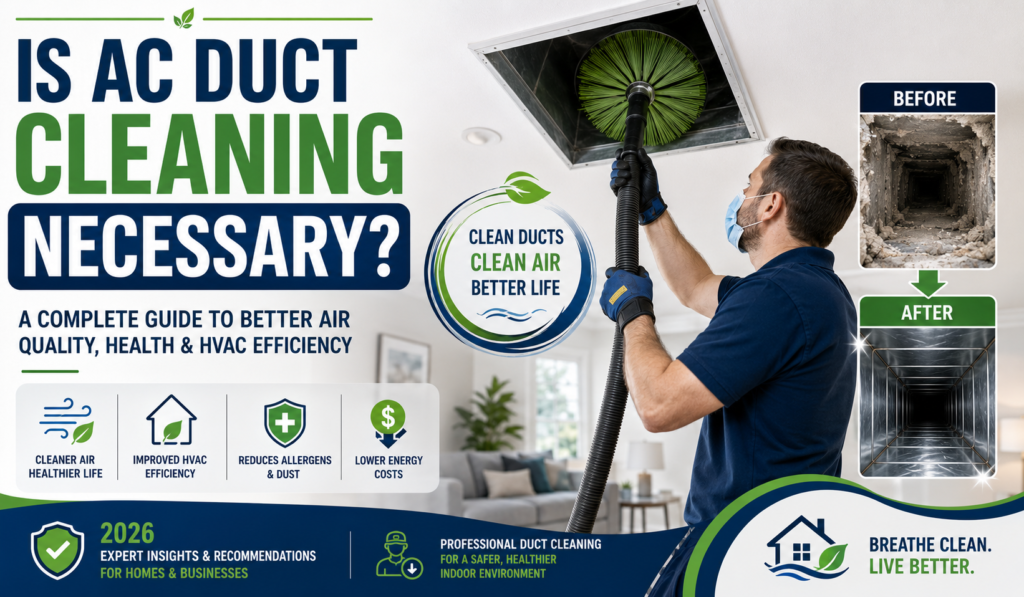
Older properties may have years of accumulated dust inside their HVAC systems. Since new occupants rarely know the maintenance history of a building, a professional inspection can provide peace of mind.
Homes with Pets and High Dust Accumulation
Pets shed hair and dander that can enter return vents and circulate through the HVAC system. Homes with multiple pets may benefit from more frequent inspections and cleaning.
Properties Located in Dusty or Humid Climates
Dusty environments increase the amount of airborne particles entering HVAC systems. Humid areas may also create conditions that encourage mold growth if moisture enters the ductwork.
When AC Duct Cleaning May Not Be Necessary
If the duct system is clean, airflow is normal, and there are no signs of contamination, professional cleaning may not be needed. Many experts agree that routine cleaning without evidence of buildup offers limited benefits.
Regular filter replacement and HVAC maintenance often provide enough protection for many systems.
Common Myths About Air Duct Cleaning
Several misconceptions exist about air duct cleaning. Understanding these myths helps homeowners make informed decisions.
Does Air Duct Cleaning Eliminate All Dust in a Home
No home can ever be completely dust free. Dust enters buildings through doors, windows, clothing, and outdoor air. Duct cleaning can reduce dust from the HVAC system, but it cannot remove every source of dust.
Can Duct Cleaning Prevent Future HVAC Problems
Duct cleaning supports system maintenance, but it cannot prevent every future issue. Mechanical failures, worn parts, and aging equipment can still occur even in a clean system.
How Often Should AC Ducts Be Cleaned According to Experts
Many HVAC professionals suggest inspecting duct systems every few years rather than cleaning them on a fixed schedule. Most homes only require cleaning every three to five years unless contamination or special circumstances exist.
Latest 2026 HVAC Industry Recommendations for Duct Maintenance
Current HVAC recommendations in 2026 focus on regular inspections, high-quality air filters, moisture control, and cleaning only when needed. Experts now emphasize condition-based maintenance instead of unnecessary routine cleaning.
Professional AC Duct Cleaning Process Explained
Professional duct cleaning begins with a system inspection to identify contamination and problem areas. Technicians then use specialized equipment to loosen and remove dust and debris from the ductwork and HVAC components.
The process often includes cleaning supply vents, return vents, and other connected areas of the system.
Modern Equipment and Technologies Used in 2026
Today’s HVAC cleaning companies use powerful vacuum collection systems, rotating brushes, compressed air tools, and camera inspection equipment. These technologies allow technicians to clean more thoroughly while reducing disruption inside the property.
How Long Does Professional Duct Cleaning Take
The time required depends on the size of the building and the condition of the ductwork. Most residential projects are completed within several hours, while larger commercial systems may require additional time.
Benefits of Hiring Certified HVAC Duct Cleaning Specialists
Certified professionals understand HVAC systems and proper cleaning methods. They use equipment designed specifically for duct cleaning and can identify problems such as leaks, mold, or damaged insulation during the inspection process.
DIY Duct Cleaning vs Professional Air Duct Cleaning Services
Homeowners can clean vent covers and replace air filters themselves, but deep cleaning inside duct systems requires specialized tools. Professional services reach areas that are inaccessible to most homeowners and provide more complete results.
Cost Factors That Influence AC Duct Cleaning Prices
The cost of duct cleaning depends on several factors including property size, number of vents, duct accessibility, contamination level, and geographic location. Additional services such as mold treatment or pest cleanup may increase costs.
How to Choose a Reliable Air Duct Cleaning Company
Choosing an experienced company is important for achieving good results. Look for businesses with proper certifications, positive customer reviews, transparent pricing, and experience with HVAC systems similar to yours.
Questions to Ask Before Hiring an HVAC Cleaning Contractor
Before hiring a contractor, ask about their cleaning methods, equipment, certifications, inspection process, and pricing structure. A reputable company should explain the work clearly and answer questions without pressure or confusing sales tactics.
Conclusion : Is AC Duct Cleaning Necessary for Better Air Quality and HVAC Performance
So, is AC duct cleaning necessary? The answer depends on your situation. Not every home or business requires regular duct cleaning, but it can be highly beneficial when dust buildup, mold, pests, odors, or airflow problems are present.
Professional AC duct cleaning can improve indoor air quality, support HVAC efficiency, and provide a cleaner environment when performed for the right reasons. The best approach is to inspect your system regularly and schedule cleaning only when clear signs show that it is needed.