
A blocked drain can turn a small plumbing problem into a major mess. Water may drain slowly, unpleasant smells may appear, or wastewater may begin to come back through the drain. A drain blockage remover can help clear some blockages, but the right method depends on what is causing the problem and where the blockage is located.
Drain blockage removers come in many forms. Some use chemicals to break down buildup, while others use enzymes, bacteria, pressure, or physical tools to remove the blockage. Understanding how each method works can help you choose a safe and effective drain cleaning solution.
What Is a Drain Blockage Remover?
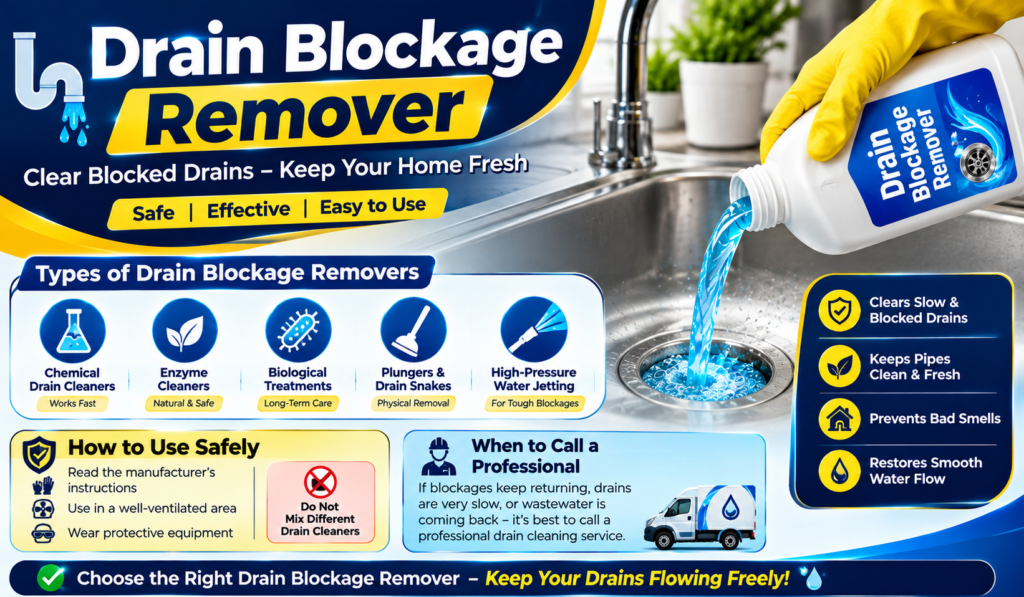
A drain blockage remover is a product or method used to clear a blocked or slow-draining pipe. It may also be called a drain cleaner, drain unblocker, drain unclogger, or blocked drain solution.
A blockage can happen when hair, grease, food particles, soap scum, sludge, or other material collects inside a pipe. A light blockage may only slow the water down. A larger blockage can stop water from flowing completely.
There are several ways to clear a drain. Chemical drain cleaners use active chemicals to break down certain materials. Enzyme and biological drain cleaners use natural enzymes or microorganisms to help digest organic buildup. Mechanical methods use tools such as plungers, drain snakes, or drain rods to physically remove or loosen the blockage. Professional drain cleaning can also use equipment such as electric drain machines and high-pressure water jetting.
The best choice depends on the type and severity of the blockage.
How Does a Drain Blockage Remover Work?
Different drain blockage removers work in different ways. Chemical drain cleaners may use ingredients that react with organic materials such as hair, grease, and other buildup. The chemical reaction can help break the material apart so water can move through the pipe.
An enzyme drain cleaner works more slowly. It uses enzymes to break down certain organic materials. These products are often used for maintenance or light buildup rather than a completely blocked pipe.
Biological drain treatments work in a similar maintenance-focused way. They contain microorganisms or biological ingredients that can help reduce organic matter inside drainage systems. Their action is usually slower than that of strong chemical cleaners.
Mechanical methods work without relying on a chemical reaction. A plunger uses pressure to loosen a blockage. A drain snake can reach deeper into a pipe and break up or pull out material. Drain rods can be used to reach blockages in larger or longer drainage pipes.
For severe blockages, professional equipment may be needed. High-pressure water jetting uses pressurized water to clean the inside of suitable pipes and remove stubborn buildup.
Common Types of Drain Blockage Removers
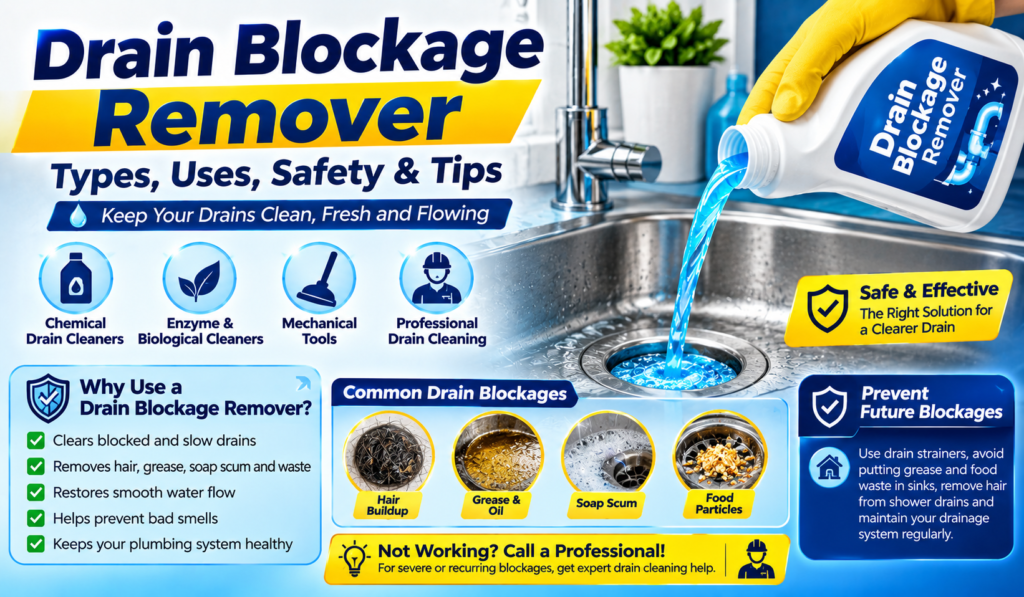
Chemical drain cleaners are widely available and can act quickly on some types of blockage. However, they must be used carefully because some formulas are highly corrosive. They are not suitable for every plumbing system or every type of blockage.
Enzyme-based drain cleaners are generally designed to break down organic matter such as grease and food residue. They usually take longer to work than chemical cleaners, but they can be useful when the problem is caused by organic buildup.
Biological drain cleaners are often used for regular drainage maintenance. They can help reduce organic buildup over time, but they are not always strong enough to clear a severe pipe blockage.
A plunger is a simple mechanical tool that can work well for certain sink, shower, and toilet blockages. It creates pressure that may loosen the material blocking the pipe.
A drain snake, sometimes called a drain auger, can reach farther into a pipe. It can help break apart or remove hair, sludge, and other physical blockages.
Drain rods are useful for larger drainage systems and outdoor drains. They can reach deeper sections of pipe than many household tools.
High-pressure water jetting is a professional drain cleaning method. It can remove stubborn deposits and buildup from suitable drainage pipes. Because it uses high pressure, it should be handled by someone with the right equipment and training.
How to Choose the Right Drain Blockage Remover
Choosing a drain blockage remover starts with understanding the problem. A slow bathroom sink caused by hair may need a different solution from a kitchen drain filled with grease. A toilet blockage also needs to be treated differently from a blocked outdoor drain.
The location of the blockage is important. If the blockage is close to the drain opening, a plunger or drain snake may be enough. If it is deep inside the pipe, a longer mechanical tool or professional equipment may be needed.
Pipe material is another important factor. Older or damaged pipes may be more sensitive to aggressive chemical products. Always check the product instructions to make sure the drain cleaner is suitable for the plumbing system.
The type of obstruction also matters. Hair, grease, soap scum, food waste, and mineral deposits do not all respond to the same treatment. Choosing a product only because it claims to work quickly may not solve the actual problem.
A recurring blockage also needs more attention. If a drain keeps becoming blocked, there may be a deeper problem in the drainage system.
How Fast Does a Drain Blockage Remover Work?
The time needed depends on the type of drain blockage remover and the material causing the blockage. Some chemical drain cleaners are designed to work within minutes. However, the exact treatment time depends on the product, the concentration, and the type of blockage.
Enzyme and biological treatments usually work more slowly. They may need several hours or longer because their action depends on biological or enzymatic processes.
Mechanical cleaning can sometimes provide faster results when the blockage is physical and easy to reach. A drain snake or plunger may clear a blockage during the cleaning process itself.
A deep or stubborn blockage may not respond to a household drain cleaner at all. Repeatedly adding chemical products can increase risk without solving the underlying problem. In such cases, mechanical drain cleaning or professional inspection may be the better option.
How to Use a Drain Blockage Remover Safely
Safety should always come before speed when using a drain cleaner. Read the manufacturer’s instructions carefully before using any product. The instructions explain how much product to use, how long to leave it in the pipe, and what type of plumbing it is designed for.
Chemical drain cleaners can cause serious skin and eye irritation or chemical burns. Wearing suitable protective equipment can reduce the risk of contact. Good ventilation is also important when using products that may release irritating fumes.
Never mix different drain-cleaning chemicals. Mixing products can create dangerous chemical reactions or harmful fumes. This includes avoiding combinations of drain cleaners with household cleaning products unless the manufacturer specifically states that they are compatible.
Splashback is another risk. Do not place your face close to the drain while a chemical treatment is being used. If a chemical cleaner has already been poured into a blocked drain, use extra caution before using another product or mechanical tool.
Can Drain Blockage Removers Damage Pipes?
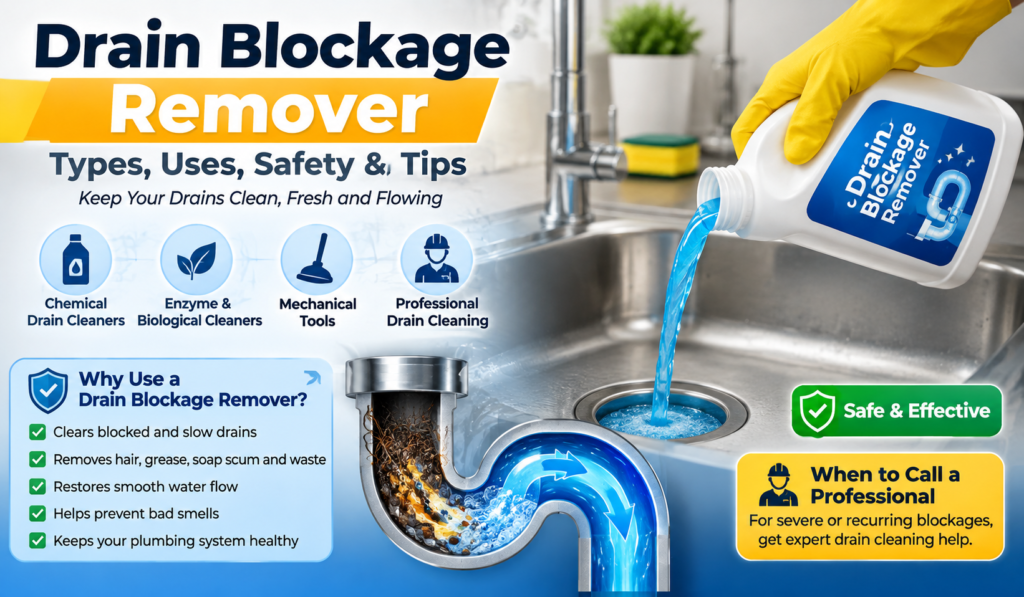
Some drain cleaners can damage plumbing when they are used incorrectly. Strong chemical products may be harsh on certain materials, especially when they are overused or left in the pipe longer than recommended.
Using too much product does not necessarily make the blockage clear faster. It can increase the amount of chemical inside the drainage system and may increase the risk of damage.
Older, cracked, corroded, or damaged pipes need extra care. A blockage may sometimes be hiding a larger plumbing problem. If a pipe is already weak, aggressive treatment may not be the best approach.
Always check whether a drain blockage remover is compatible with your pipe material. If you are unsure about the condition of your plumbing, professional advice can help prevent further damage.
Drain Blockage Remover for Different Types of Drains
A kitchen drain often becomes blocked because of grease, food particles, and other kitchen waste. Removing visible waste and using suitable mechanical or cleaning methods can help. Pouring large amounts of cooking grease into a sink should also be avoided.
Bathroom sinks commonly collect hair, soap scum, and personal care product residue. A plunger or drain snake may be useful when the blockage is close to the opening.
A blocked shower drain often has a hair blockage mixed with soap buildup. Removing the hair and using a suitable drain-clearing method may restore normal water flow.
Bathtub drains can develop similar problems because hair and soap enter the drainage system over time. A mechanical drain cleaner can sometimes remove this material.
Toilet blockages require special care. A suitable toilet plunger may work for a simple blockage, but chemical drain cleaners should only be used if the product specifically states that they are suitable for toilets.
Outdoor drains and main drainage lines can collect leaves, mud, sludge, and other debris. These blockages may be too large or deep for a household drain cleaner. Drain rods or professional equipment may be more suitable.
When a Drain Blockage Remover Does Not Work
A drain blockage remover may not work when the blockage is too deep, too large, or made from material that the treatment cannot break down.
Repeated backups are an important warning sign. If the same drain becomes blocked again soon after cleaning, the problem may be deeper inside the pipe.
Multiple slow drains can be another sign of a larger drainage issue. If the sink, shower, bathtub, or other fixtures are all draining slowly, the problem may not be limited to one small pipe.
Standing wastewater, sewage smells, gurgling sounds, or water returning through another fixture can also indicate a serious drainage problem. These signs may point to a blockage in a larger section of the drainage system.
When these problems appear, repeatedly using chemical drain cleaners may not be the right solution. Professional drain cleaning can help locate and clear the blockage more effectively.
Drain Blockage Remover vs Professional Drain Cleaning
Household drain blockage removers can be useful for simple and accessible blockages. A plunger, drain snake, or suitable drain cleaner may solve a small problem without professional help.
Professional drain cleaning is different because trained technicians have access to specialized equipment. Drain rods can reach deeper blockages, while electric drain machines can help clear difficult obstructions.
Inspection cameras can also help identify problems inside a pipe. They may reveal heavy buildup, damaged sections, tree root intrusion, or other issues that cannot be seen from the drain opening.
High-pressure water jetting can clean suitable drainage pipes by using pressurized water to remove stubborn deposits. This method can be especially useful when normal household methods cannot restore proper flow.
Recurring blockages should not simply be treated again and again. Finding the cause can help prevent repeated drainage problems and unnecessary treatment.
How to Prevent Future Drain Blockages
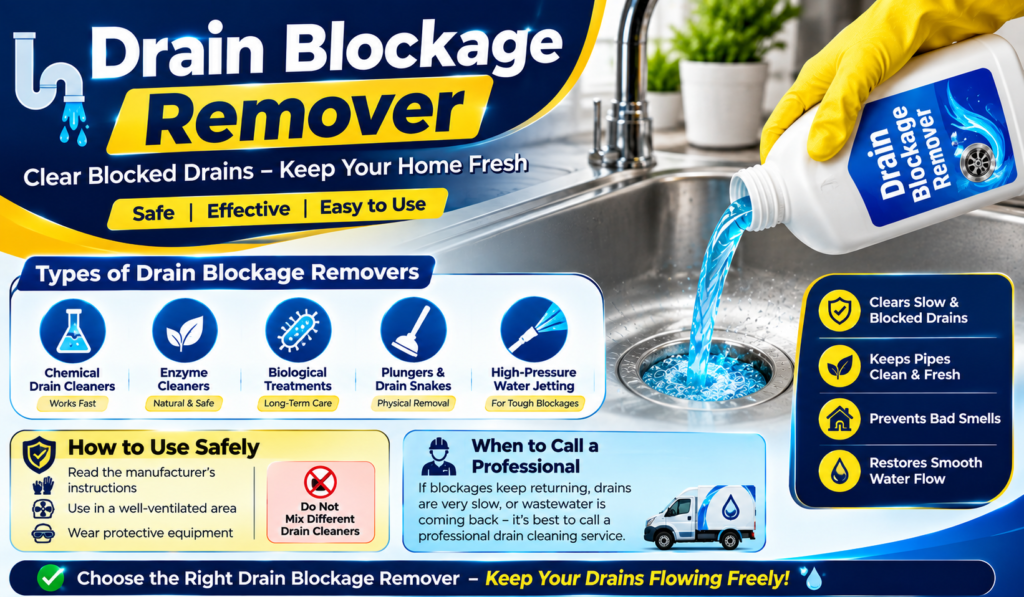
Preventing a blockage is often easier than clearing one. Drain strainers can help stop hair, food particles, and other solid waste from entering pipes.
Kitchen sinks should not be used to dispose of large amounts of cooking grease or food waste. Grease can stick to the inside of pipes and collect other materials over time.
Hair should be removed from shower and bathtub drains regularly. This simple habit can reduce the chance of a blocked shower drain developing.
Toilets should only be used for materials designed to be flushed. Items that do not break down easily can cause serious pipe blockages.
Regular drainage maintenance can also help identify problems before they become severe. If a drain repeatedly becomes slow or blocked, it is better to investigate the cause rather than keep treating the same symptom.
Frequently Asked Questions About Drain Blockage Remover
Which drain blockage remover works fastest?
Some chemical drain cleaners are designed to act within minutes, but speed does not always mean the product is the best choice. A mechanical tool can sometimes clear an accessible blockage quickly, while enzyme and biological treatments usually need more time.
Do drain cleaners work on hair and grease?
Some drain cleaners are designed to work on organic materials such as hair and grease. However, their effectiveness depends on the product and the size and condition of the blockage. A drain snake or other mechanical method may be more suitable for a heavy physical blockage.
Are enzyme drain cleaners effective?
Enzyme drain cleaners can be useful for breaking down certain organic materials and reducing buildup. They generally work more slowly than strong chemical cleaners and may be better suited to light blockages or regular drain maintenance.
How often can a drain treatment be used?
The correct frequency depends on the product. Always follow the manufacturer’s instructions rather than using a drain treatment more often than recommended. Frequent chemical treatment may create unnecessary risks for some plumbing systems.
Are chemical drain cleaners safe for pipes?
Chemical drain cleaners can be safe when the product is suitable for the plumbing system and used exactly as directed. However, some products can be harsh on certain materials or damaged pipes. Checking compatibility before use is important.
When is professional drain cleaning necessary?
Professional drain cleaning may be necessary when a blockage keeps returning, affects several drains, causes wastewater backup, produces sewage odors, or does not respond to normal household methods. Professional equipment can also help locate problems deep inside the drainage system.
Conclusion: Choosing an Effective Drain Blockage Remover
Choosing the right drain blockage remover depends on the type, location, and severity of the blockage. A simple blocked sink may respond to a plunger or drain snake, while organic buildup may respond to an appropriate enzyme or chemical drain cleaner.
Safety is just as important as effectiveness. Always follow product instructions, avoid mixing cleaning chemicals, and check whether the treatment is suitable for your plumbing. Older or damaged pipes require extra caution.
If the blockage is deep, severe, or recurring, professional drain cleaning may be a safer and more effective solution. Finding the cause of the problem can also help prevent future blockages and protect the drainage system over time.
The best drain clearing method is not always the strongest or fastest one. It is the method that matches the blockage, protects the plumbing, and solves the problem safely.